
Starting from iOS 17.4 , "cell transplantation? —No Way!"
Why does iOS 17.4 block cell transplantation? The cause and effect are explained here!
In the second-hand market, iPhone is the hardest hit by "demon machines" because it has the largest market share, a single model, and a very mature "supply chain". But this also brings a problem: if you want to buy a second-hand iPhone, you must be more careful.
Apple is well aware of this, so it has been blocking the "financial path" of third-party repairers. In addition to the obvious updates, the latest iOS17.4 official version also quietly blocked a long-standing loophole: transplanting batteries.
Why transplant batteries? What are the benefits of transplanting batteries? Why does Apple want to block this loophole. If you rarely pay attention to second-hand phones, you should have a half-understanding of this issue. This article will popularize it.
1. The background of transplanting batteries
Merchants tamper with battery health by transplanting batteries, of course, in order to sell the phone as soon as possible. But the more fundamental reason is Apple's strict restrictions on repairs.
Since the iPhone XS series, Apple has implemented extremely strict encryption of batteries. After replacing the official battery, the system will prompt that the battery has been replaced. If you replace an unofficial battery, the battery health status cannot be displayed, and there may even be a pop-up window warning that the battery is not original.
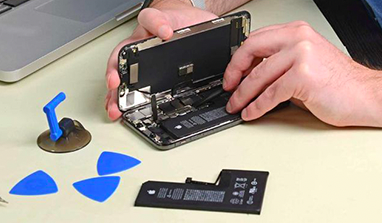
You should know that users who buy second-hand mobile phones are very concerned about whether the mobile phone is "unopened and unrepaired". Because no one is sure whether the hardware of this iPhone was secretly modified or non-original accessories were used during the disassembly and repair.
Therefore, when a second-hand iPhone has a battery pop-up window, it means that it has been disassembled and repaired. In the minds of consumers, this phone must depreciate by at least 300 yuan to be worth buying. This is obviously unacceptable to merchants and users.
2. The implementation principle of transplanting batteries
So what is the way to replace third-party batteries without pop-ups, so that the mobile phone battery is like it has not been replaced? So far, transplanting batteries has become the only answer.
Transplanting a battery cell is essentially replacing a battery. The core logic is to use a welding machine to transplant the cable of the old original battery to a new third-party battery, thereby deceiving Apple's detection mechanism and making the system think that it is an original battery, without pop-up windows, and showing 100% health.
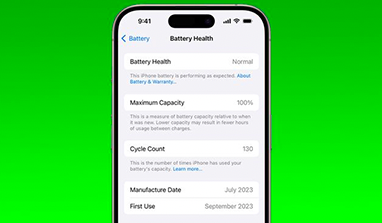
But don't think it's over here, Cook has already left a backhand. Even if the battery cell is transplanted and a new battery is replaced, the output voltage of the iPhone has been fixed in the underlying data, which means that the new battery after replacement can only be discharged according to the original battery health.
For example, the original battery only has 70% health left. After its cable is transplanted to the new battery, the output voltage set by the cable is still discharged according to the 70% health standard.
The battery health is displayed as 100%, but the voltage and battery life are still at the level of the original battery when it is 70% healthy, which is "voltage reduction and capacity lock", which is equivalent to taking off pants to fart.
In order to solve this problem, there is also a technology called "super-capacity battery" on the market. Of course, it is not related to this article, so we will not say much. Just learn about it.
3. iOS 17.4 officially bans transplanted batteries
Starting from the official version of iOS17.4, Apple officially banned transplanted batteries, and this method has completely failed from now on.
The principle is that iOS 17.4 now reads battery health data directly from the iPhone's running log, no longer relying on the information of the battery cable. The log information of the iPhone can only be read, not modified.
This means that even if the battery cable is replaced, the incorrect battery health cannot be displayed-it's very simple, because the previous battery data is still retained in the system log.
If you want to repair it, you can only use i4 Assistant's professional flashing to clear the previous battery health data by completely flashing the machine. But the process needs to back up the data, and it will take two or three hours. The process is very troublesome and may cause data loss.
The above is the complete interpretation of iOS17.4's ban on transplanted batteries. Finally, I want to say that although transplanted batteries seem to be a trick by merchants, it is essentially because Apple's official batteries are too expensive!